
Case Studies
Fambit: Simplifying Family Communication and Everyday Coordination
An empathetic multi-generational health and household management mobile application designed to unify family medication tracking, habits, and inventory while hardcoding privacy and consent into its core architecture.
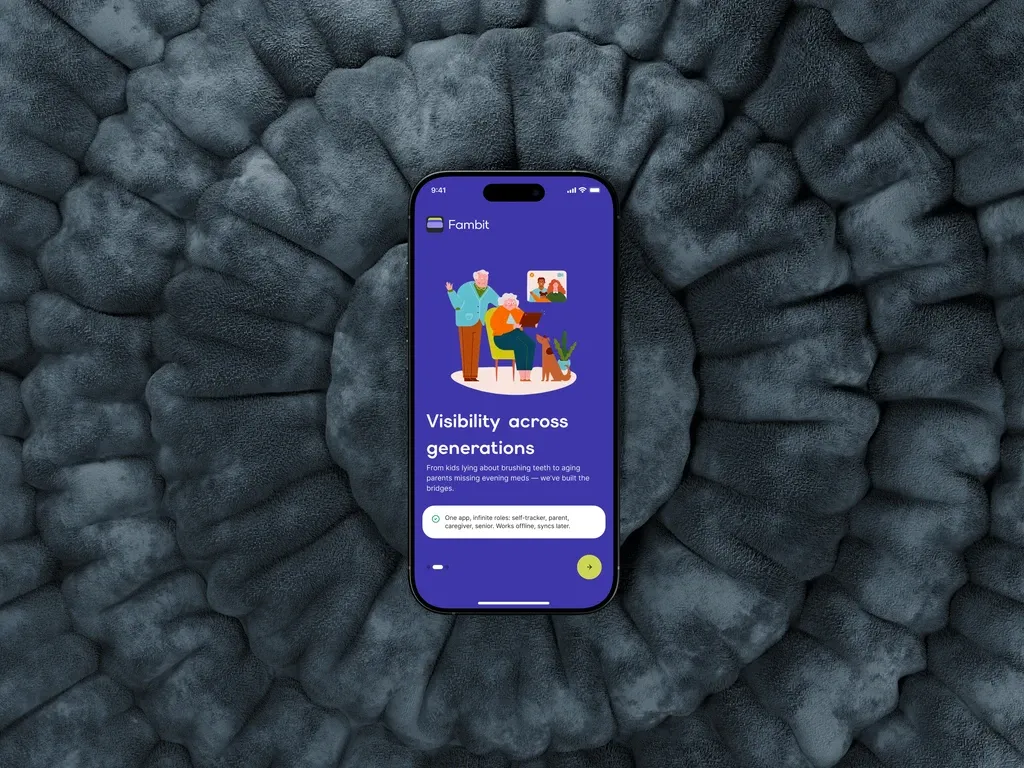
Fambit is a comprehensive family health and coordination mobile platform architected over an intensive 3-week design sprint. The product solves a widespread household stressor: working parents attempting to coordinate their own wellness routines, children's daily habits, and aging parents' medication schedules across fragmented, isolated applications. By merging medication reminders, habit tracking, low-inventory alerts, and multi-generational dashboards into a single ecosystem, Fambit provides a unified home base for family health management.
Client
Fambit
Year
2026
Tools
Figma, Figjam, Lottie, Zapier, Zeplin
Platforms
Cross-Platform Mobile Application (iOS & Android)
Challenge:
Modern households managing care across multiple generations face severe administrative fragmentation. In practice, families were forced to run up to four disconnected tools at once—a medication timer, a child habit tracker, a separate grocery or inventory list, and mental math holding everything together. This caused acute operational strain:
The Caregiver Burden: Adult children wanted visibility into an aging parent's medication adherence without turning into a full-time, high-stress monitor or making the relationship feel like invasive surveillance.
Lack of Accountability Loops: Parents had no reliable way to verify if children actually completed daily routines like brushing teeth or taking vitamins.
Inventory Blind Spots: Households frequently ran out of daily essentials like contact solution or critical over-the-counter medications because inventory tracking was completely disconnected from daily logging.
Project goal:
The primary objectives of the Fambit product design sprint were:
Discovery:
Through rapid user journey mapping and persona audits representing three different age brackets, we identified the central design paradox: How do you give a caregiver visibility into someone else's health habits without making that person feel watched?
The Core Constraint: Live tracking was entirely off the table because it reads as intrusive surveillance. Perpetual, unyielding push notifications were also banned because they feel like nagging.
Strategic Filter: Every interface and architectural decision had to pass a strict consent filter that successfully earned the trust of three distinct demographics: a young child, an adult manager, and an aging senior.
Process:
Operating on a rapid 3-week design timeline, the product development and execution process moved swiftly through targeted phases:
Problem:
The underlying architectural and ethical problem was managing the boundary of information visibility. Bolting privacy settings onto an app after launch destroys trust. The design challenge required building strict permission boundaries, read-only status logs (never raw activity feeds), and mutual opt-in consent directly into the core product architecture from day one.
Final Design:
The finalized Fambit product architecture incorporates several innovative design solutions:
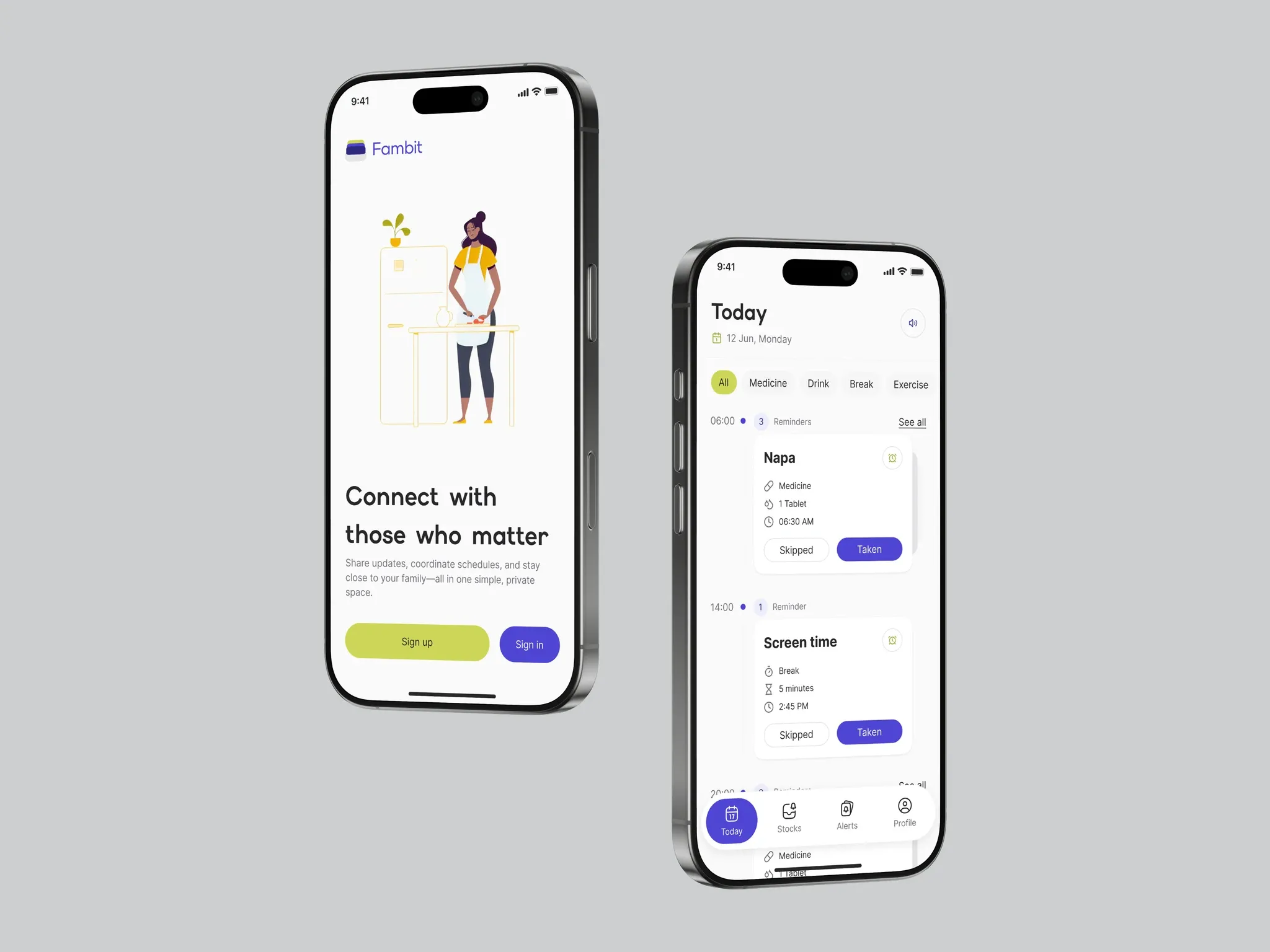
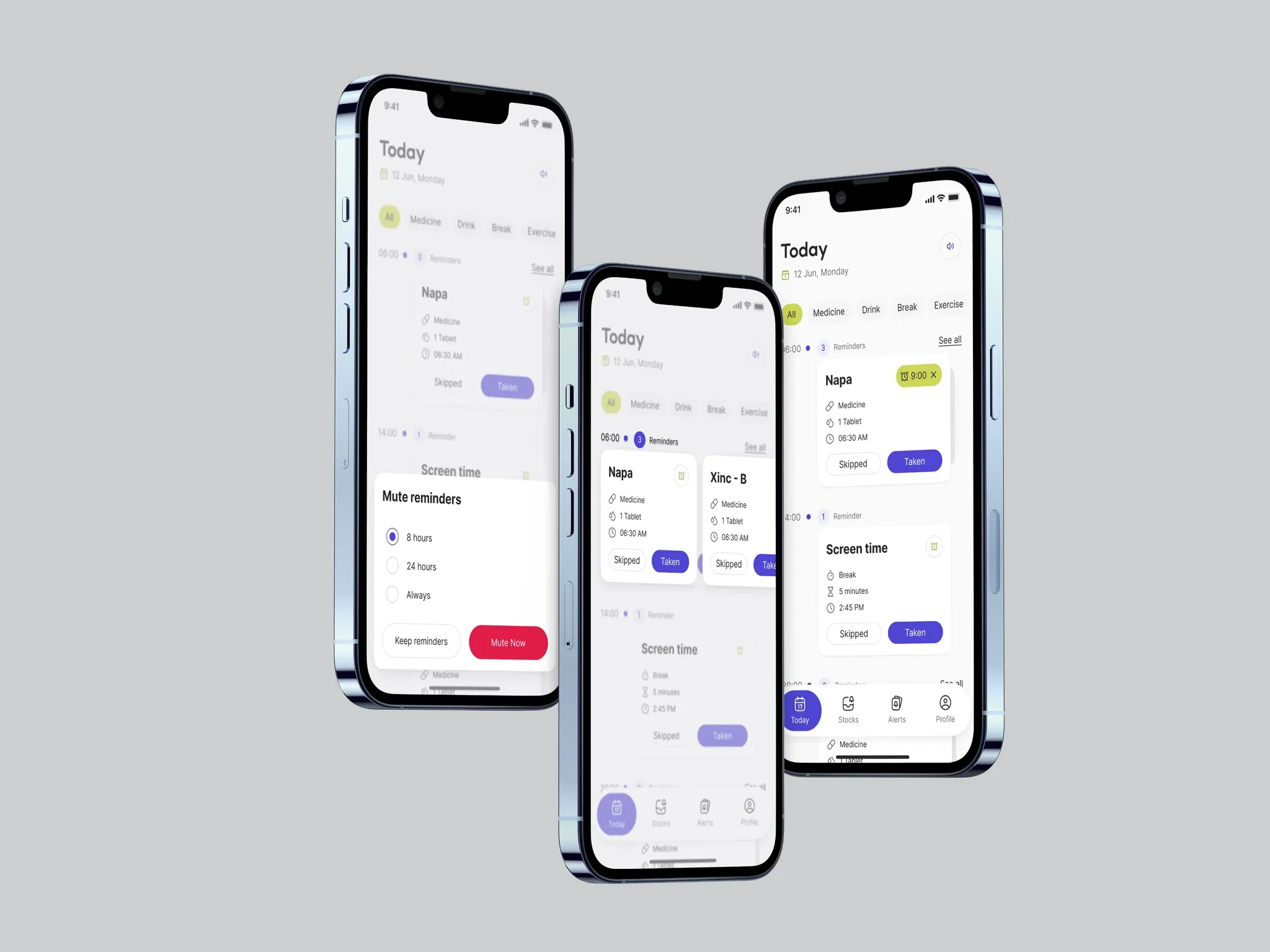
Repeat-Until-Confirmed Reminders: Medication and task alerts repeat at intelligent, configurable intervals until explicitly marked as Taken, Skipped, or Snoozed, eliminating missed doses caused by a single ignored notification.
Consent-Driven Family Dashboard: Provides parents and adult children with high-level, read-only status updates regarding daily adherence, operating entirely on mutual consent so no one feels monitored.
Integrated Inventory Management: Automatically cross-references medication logging data against remaining supply quantities, proactively prompting restocks before bottles run dry.
Multi-Generational Mode Switcher: Customizes UI layouts based on the user—sticker-driven checklists for kids, standard metrics for adults, and high-contrast large text with voice confirmation and optional caregiver escalation for seniors.
Context-Aware Nudging: Smart suppression algorithms automatically delay "stand up and stretch" alerts if calendar integrations show an active meeting, activate a one-tap "I'm sick" mode to prioritize critical medications, and respect overnight quiet hours.
Impact:
Engagement & Retention: Positioned for high adoption rates due to tailored multi-generational interfaces that eliminate the friction of a "one-size-fits-all" design approach.
Adherence Reliability: Dramatically minimized missed doses through persistent, context-aware reminder loops and transparent caregiver reassurance.
Operational Efficiency: Successfully converted mundane household inventory management into an automated byproduct of daily health logging.
Learning:
Architecture Precedes Interface: The hardest UX challenge in multi-generational health tech is not visual styling; it is deciding what data can be seen by whom and codifying those consent boundaries into the foundational product architecture before a single line of code is written.
Conclusion:
Fambit proves that lifestyle and health applications spanning multiple generations can successfully balance family care with personal dignity. By making consent the primary constraint rather than an afterthought, the platform transforms anxiety-ridden caregiving routines into a secure, collaborative, and harmonious family experience.
EV Infrastructure
Quanta
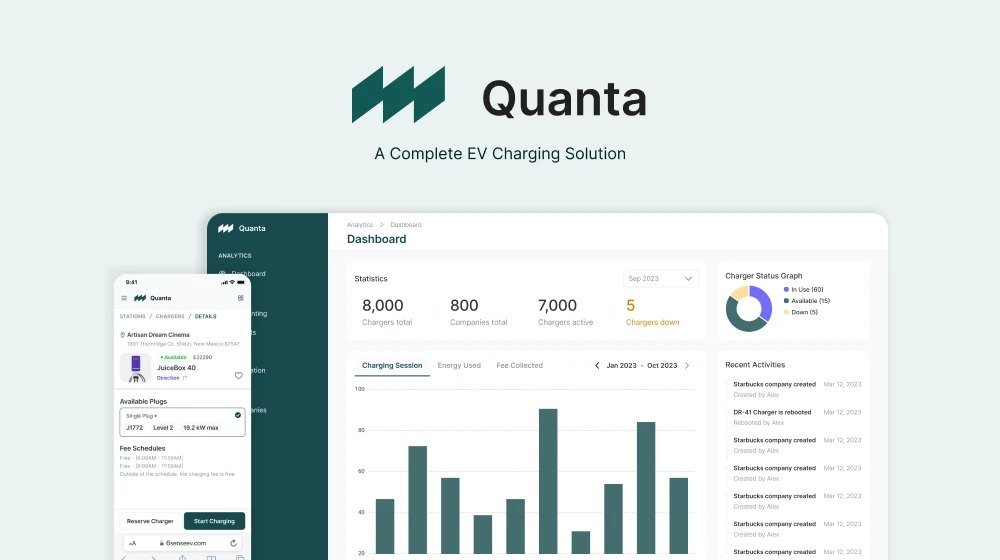
A complete EV charging solution for operators managing thousands of chargers.

Real Estate Marketplace
ROL.AU
A real estate property portal for buyers, sellers, renters, and agents.