
Case Studies
Support Dash: Centralizing Customer Support for Faster Issue Resolution
A targeted, high-efficiency web dashboard designed to replace a cluttered Google Sheet for a growing SaaS support team, eliminating operational friction without the bloat of enterprise suites.
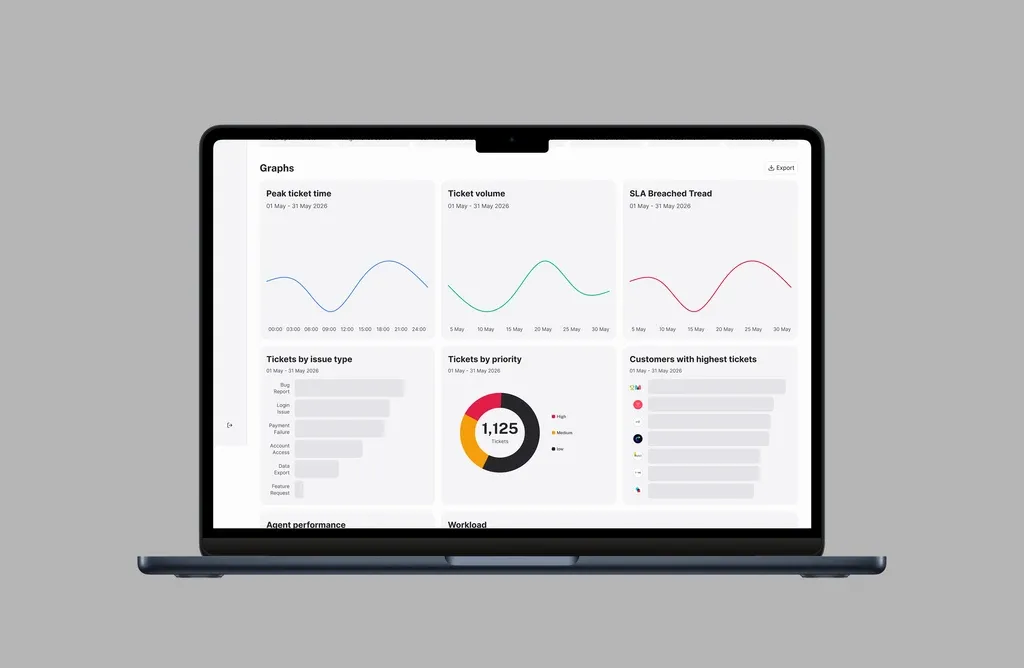
SupportDash is a custom-tailored internal support workspace conceptualized and executed over a focused 3-week design sprint. The product addresses a common organizational tipping point: a lean support team managing high ticket volumes out of an aging, shared Google Sheet. As scale outgrew the spreadsheet, agents lost hours each shift fighting administrative friction. SupportDash bridges the gap by delivering the exact operational clarity and speed a modern support team needs, deliberately avoiding the massive onboarding overhead and high costs of heavy enterprise help desk solutions.
Client
Support Dash
Year
2026
Tools
Figma, Figjam, Lottie, Zapier, Zeplin
Platforms
Responsive Web Application (Internal Dashboard)
Challenge:
The team's legacy Google Sheet worked well at a dozen tickets a week, but broke down around two hundred. Four critical problems had quietly compounded over time, crippling daily productivity:
Zero Visual Priority: Every text row looked identical. Urgent, high-impact issues sat next to routine inquiries with no visual cues to differentiate them.
Silent SLA Breaches: There was no automated mechanism to surface tickets nearing their service-level agreement (SLA) deadlines. The team only discovered a breach after it had already occurred.
Duplicate Assignments: Agents frequently picked up and worked on the same ticket independently due to a complete lack of real-time ownership visibility.
Unreliable Status Updates: Free-text status fields invited typos, rendering reporting inaccurate and requiring tedious manual cross-checking.
Project goal:
The primary objectives of the 3-week product design initiative were:
Discovery:
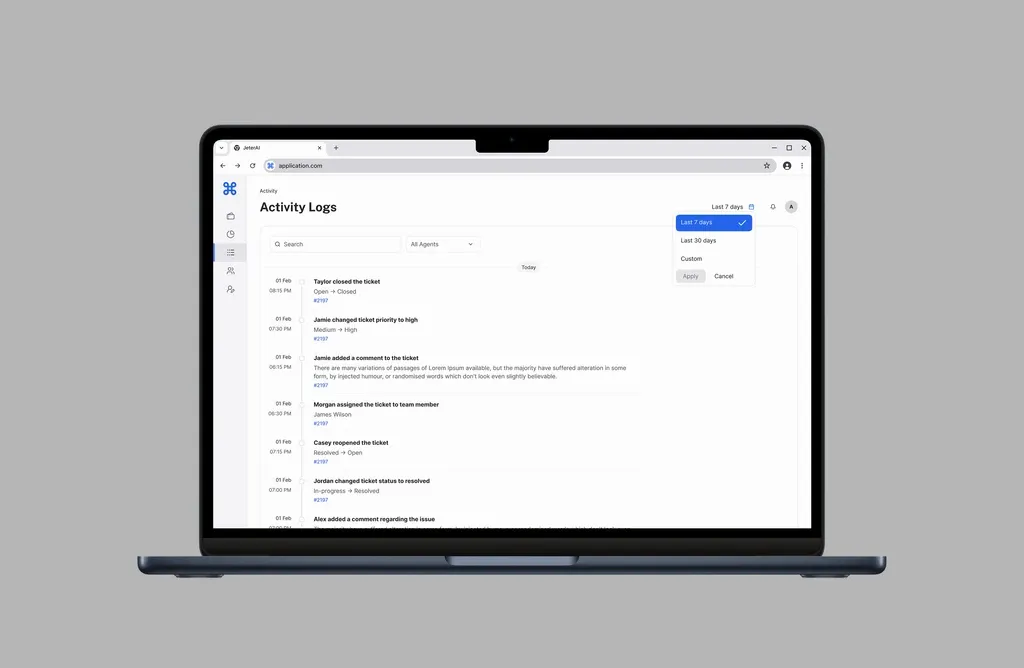
Through workflow observation and stakeholder interviews with support agents and team leads, we mapped out the operational bottlenecks.
Core Behavioral Finding: Support agents do not want deep multi-page menus or heavy ticket management workflows; they want speed, scannability, and instant keyboard-or-click actions.
Strategic Boundary: The client had already rejected enterprise help desk platforms for being too complex and expensive. The design brief required a solution tailored specifically to their actual workflow, rather than a kitchen-sink feature checklist.
Process:
Operating on a rapid 3-week design and prototyping sprint, the project moved swiftly through targeted phases:
Problem:
The underlying architectural challenge was maintaining extreme minimalism while solving complex multi-variable tracking. The design problem required proving that a lightweight tool could manage urgent priorities and SLAs without collapsing into an overly complex layout. Every proposed feature had to pass a strict filtering question:
Does this add absolute operational value, or does it start turning SupportDash into the bloated enterprise suite we are trying to avoid?
Final Design:
The finalized SupportDash interface incorporates high-density, low-friction features engineered for speed:
Visual Priority & SLA Awareness: Color-coded priority badges (red, yellow, green, gray) and inline SLA status meters (On Track, Under 4 Hours Left, Breached) replace manual deadline checks at a glance.
Quick Custom Filters: A persistent filter bar built around real agent queries (e.g., "show me my open high-priority tickets") that combine instantly. Current views serialize into the URL, making them easily bookmarkable and shareable.
Bulk Actions: A streamlined batch-editing interface enabling agents to select multiple rows and reassign or close them in a single confirmed action, wiping out major spreadsheet time sinks.
Slide-Out Detail Panel: Clicking any row opens full conversation history and status controls in a side drawer without leaving the main table, ensuring agents never lose their place.
Managerial Workload Visibility: An inline open-ticket count next to each agent's name in assignment dropdowns, sorted lightest-to-heaviest, allowing managers to instantly rebalance shifts when someone calls in sick.
Impact:
Resolution Velocity: Internal prototype testing estimated a 30% reduction in ticket resolution time compared to legacy spreadsheet tracking.
SLA Compliance: Achieved a projected 45% drop in missed SLAs by surfacing time-sensitive warnings proactively rather than reactively.
Administrative Relief: Eliminated duplicate assignments and reporting errors entirely through standardized status fields and real-time owner indicators.
Learning:
Discipline Over Scope: The hardest part of designing SupportDash was saying no to features that looked impressive on paper but would have slowed down learning and execution. Lightweight, purpose-built tools win through rigorous design discipline, not endless feature bloat.
Conclusion:
SupportDash successfully proved that growing teams do not automatically need expensive enterprise software to solve operational scaling pains. By respecting the speed and simplicity of a spreadsheet interface while injecting modern state management, visual hierarchy, and workflow automation, the product delivered an ideal balance of power and lightness.
EV Infrastructure
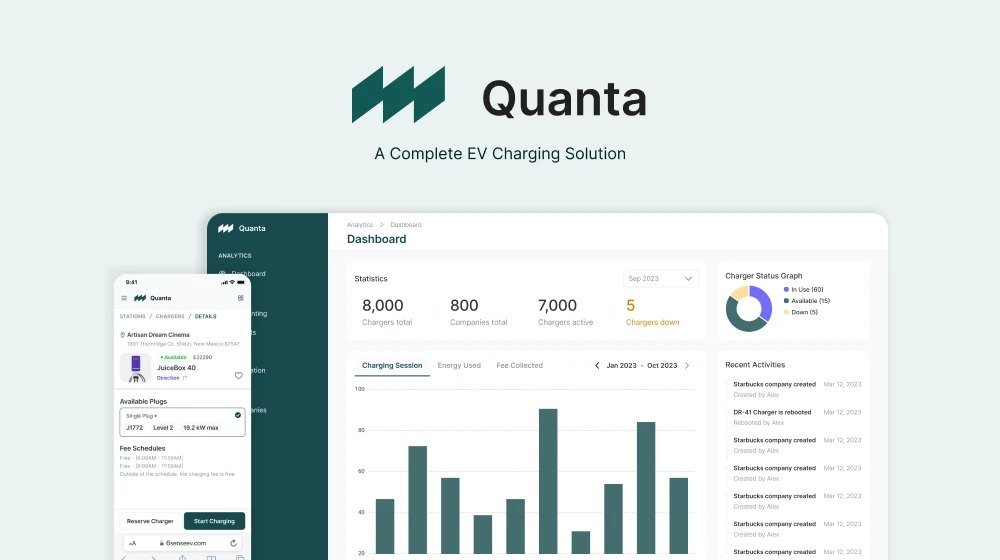
Quanta
A complete EV charging solution for operators managing thousands of chargers.
Real Estate Marketplace
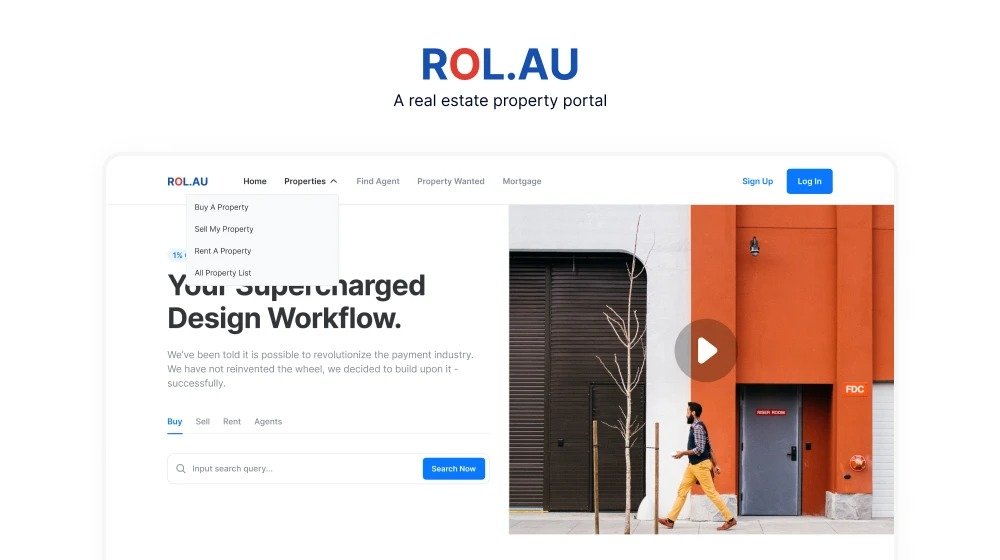
ROL.AU
A real estate property portal for buyers, sellers, renters, and agents.